


Retired LEGO Designer's Garage Project Ends Up in a WW2 Museum
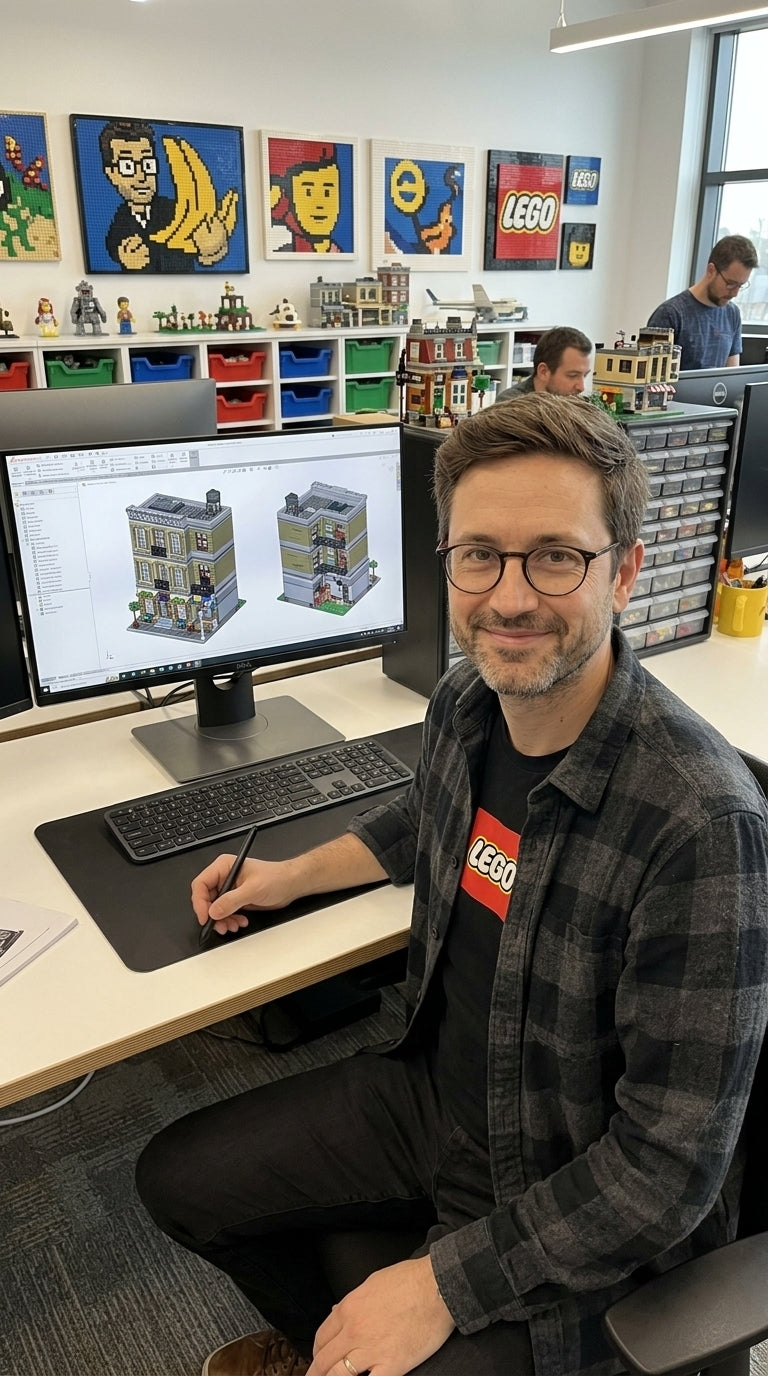
After 18 years working with The LEGO Group, James felt there was a massive gap in the market. "LEGO won't touch military history," he explains. "They haven't since 1956 when they phased out their line of plastic toy pistols. That's over 70 years!"
He got tired of waiting so, "I left, to pursue the one thing I cared about the most, designing the iconic machines that made the world what it is today."
It started with the Sherman...
After 2 years of research, design, building and iterating, his build was complete.
His First Plan Was To Build It From Real LEGO. That Was The Problem.
Manning's first idea was simple. Build the sets from real LEGO bricks and sell them himself.
It fell apart fast.
To get the parts, he had to buy LEGO on the resale market. The prices there are brutal. You bid against other collectors for a limited number of each piece, and once a piece sells out, it is gone.
"You cannot run a business on that. There is only so much stock of any one brick. The second people started ordering, I would have run dry. And to cover the resale prices, I would have had to charge a fortune."
The one thing he refused to do was charge a fortune.

The Sets Already On The Market Made Him Angry
So he looked at the brands already selling military kits. Brands like Brickmania.
In his view the detail did not match what he had built. And the prices were aimed at wealthy collectors, not the people he actually wanted to reach.
Because Manning knows exactly who his customer is. He is his customer.
"These are the guys I spend my weekends with. We meet at the museums, at the conventions. We are all just history nerds. They work hard for their money. I am not going to rip my own friends off."
That ruled out the premium brands. It also ruled out the cheap ones, because he did not want his friends disappointed by crumbling bricks, sloppy molding and an awful build. Which left him with a question.
He Went Hunting For A Brick Nobody Could Tell Apart From LEGO
If he could not use LEGO, he needed a brick that felt exactly like it.
So he did what a LEGO designer would do. He studied the plastic.
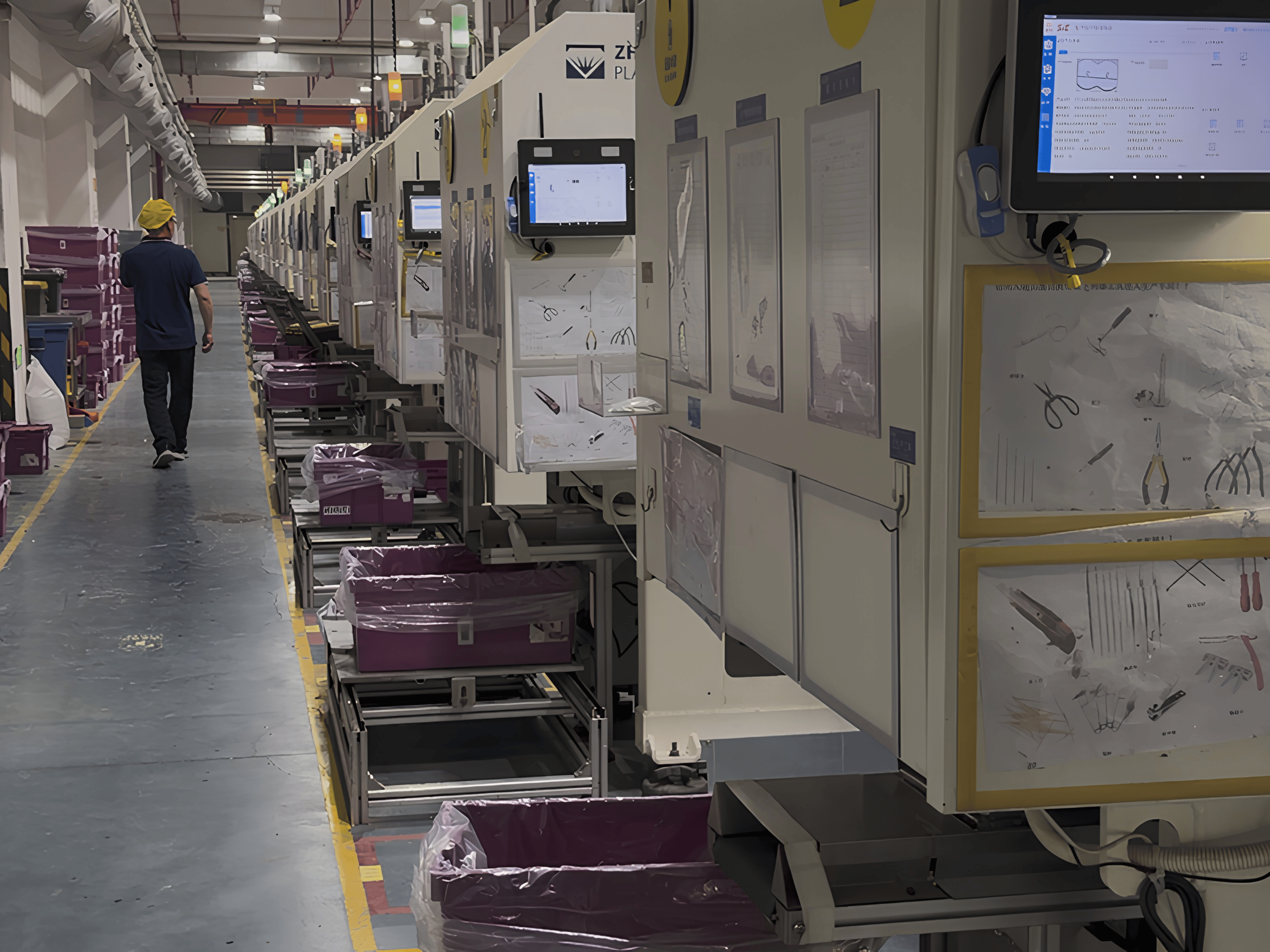
He spent months testing factories. Most failed. Then he found one using the same grade of ABS plastic LEGO uses, run through Swiss molding machines that hold tolerances to 0.009mm. That is the gap that gives a brick its grip, the firm snap you feel when two pieces lock.
Manning designed LEGO sets for 18 years. He says he could not tell these bricks apart from the real thing.
And it is all legal. The patents on the basic building brick expired decades ago. That is why compatible systems exist at all, and why the only thing that separates a good one from junk is the plastic and the mold.
Why LEGO Costs So Much, And It Is Not The Plastic
If the plastic can be matched, why is LEGO so expensive?
Manning is blunt about it.
"It is not the brick. LEGO has so much demand they would rather raise prices than build new factories. Then there are the licensing fees, the Star Wars tax. And on top of all of it, you pay extra just for the name on the box."
You are not getting more brick. You are paying for the logo.
He Turned Down Factory After Factory
Finding good plastic was only half of it. Manning had a checklist, and most factories missed it.
Some still turned out the warped, flimsy plastic you see advertised on sites like Temu. He would not put his name, or his friends' money, anywhere near that.
Then he found a brand called BrickWar, already trying to fill the exact gap he cared about. They met every point on the list. He submitted his Sherman design. They called the same day, and made him their lead designer.
Six Months Later, The Set Was Finished
Manning and BrickWar spent another six months on the final build.
Custom molded parts for the turret, the treads, the hull. A full interior. Detail across the entire tank. Printed pieces, not stickers. Four historically accurate crew figures with printing on all sides, plus a set of weapons and accessories, all custom molded.

Then they priced it.
A set this size, if LEGO ever made it, would run about $225. A small maker buying parts on the resale market could not break even at that unless they charged $400 or more, the kind of money Brickmania asks. BrickWar makes its own molds and skips the brand tax, so the same museum-grade set sells for $103.
"Same snap. Same plastic. Half the price. You are just not paying the LEGO tax."
Then His Friend Saw It
One weekend, Manning brought the finished Sherman to a convention. He went with Rick, an old friend he had met years earlier at a military show. The two had stayed close, two buffs who never understood why the biggest toy company on earth refused the one subject they loved.
What Manning had half forgotten was that Rick runs a WW2 museum.
Rick took one look at the tank and stopped.
"He told me it belonged in the museum. I thought he was joking."
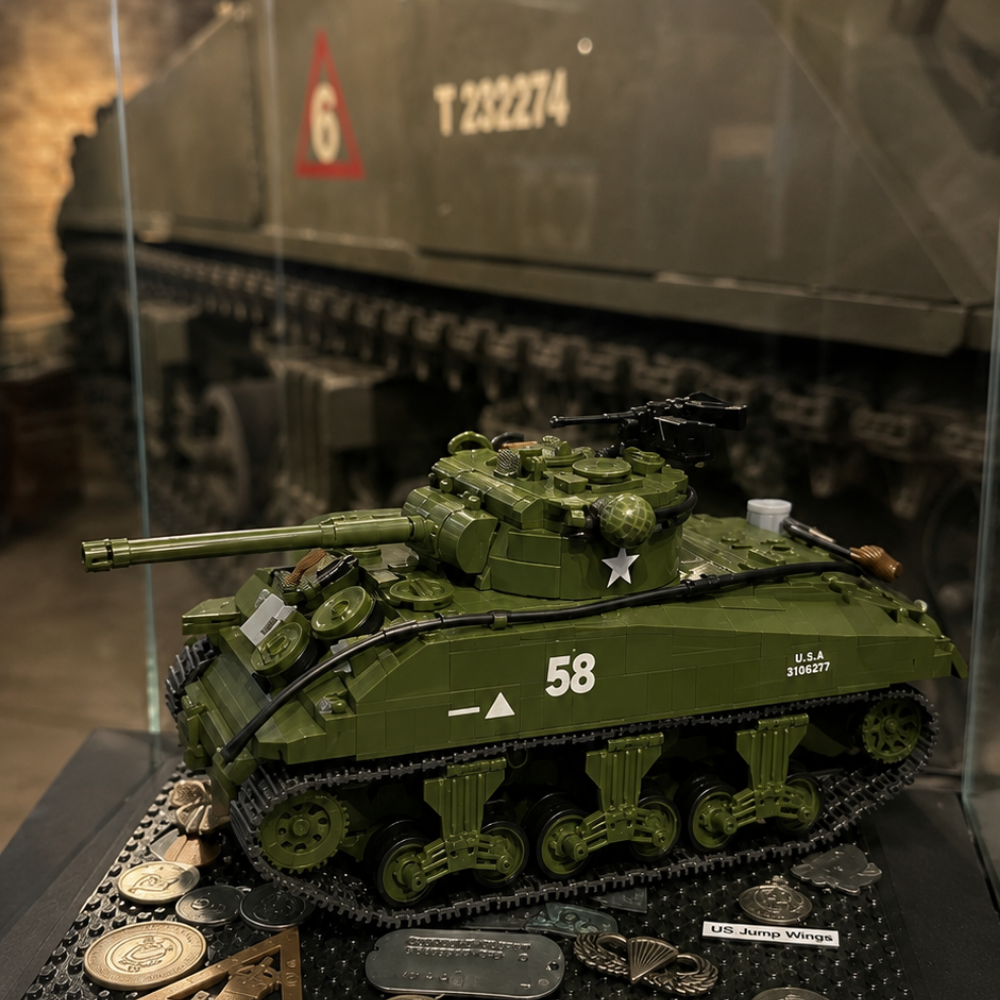
He was not. Rick put it in a glass case on the main floor, beside the museum's full size M4A3 Sherman.

Then something strange happened. Visitors started spending more time at the brick model than at the real tank. They kept asking the same two questions. Is this LEGO? And where can I buy it?
A toy designer's garage project, drawing a crowd away from a sixty ton war machine. That is what put this story in the news.


